English



New Technology Research

A
Direct-Welding CCS
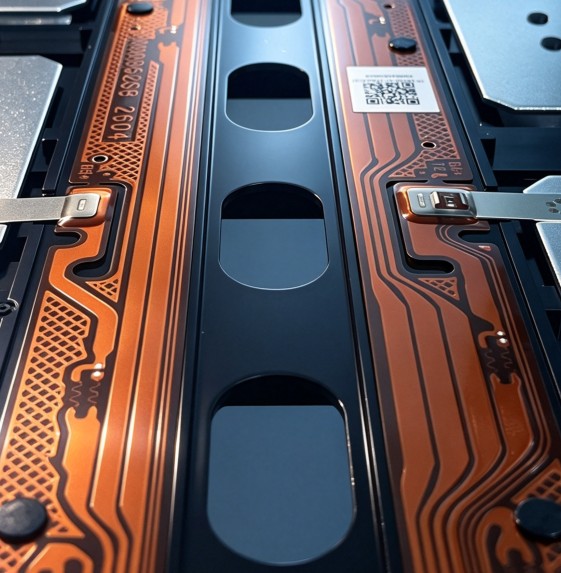
With the rapid development of new energy vehicles, energy storage, and other industries, as well as intensifying market competition, manufacturers are actively exploring cost-competitive CCS solutions while ensuring performance requirements. Among them, the signal acquisition component, FPCA, as a core component that accounts for a significant proportion of the overall cost, has become a key focus for optimization.
The FPC solution, featuring a lower-cost busbar, piercing terminal connectors, and a nickel tab-free design, represents a technical route that balances reliable performance with cost advantages.

FFC Busbar
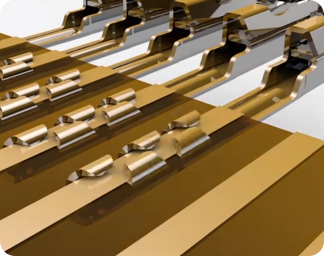
Piercing Crimp Terminal
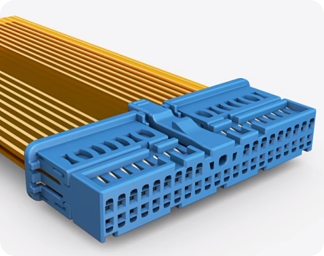
Solderless connectors can be directly connected to the BMS board.
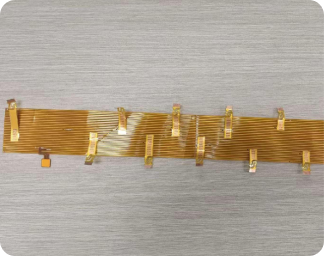
Nickel Tab-Free FPC Can Be Directly Welded to Aluminum Busbars
B
PEN as an Alternative to PI
Analysis of the Core Advantages of PEN as an Alternative to PI
- Significantly Improved Gas Barrier Properties
- The naphthalene ring structure of PEN gives it gas barrier properties far superior to those of PI. Its barrier performance against water vapor, oxygen, and carbon dioxide is 3–5 times higher than that of PET, making it particularly suitable for applications requiring moisture and oxidation resistance, such as food packaging and hydrogen fuel cell membranes.
- Superior Chemical Stability
- PEN offers better resistance to organic solvents, acids, and alkalis than PI, with less oligomer precipitation during processing. It is well suited for chemically corrosive environments, such as automotive electronics and hybrid fuel systems.
- Cost and Processing Advantages
- PEN is less expensive than PI, and its processing temperature of approximately 180°C is lower than that of PI, which typically exceeds 300°C. This helps reduce energy consumption and equipment requirements, making PEN suitable for medium- and low-temperature processes such as 5G flexible circuit boards.